
Faith
Strong belief in the doctrines of a religion, based on spiritual conviction rather than proof.
‘bereaved people who have shown supreme faith’
Belief
An acceptance that something exists or is true, especially one without proof.
‘his belief in extraterrestrial life’
– Oxford dictionary
On June 5, 2017 one of CNN’s segments was a report on Donald Trump’s excessive use of the phrase “believe me”. The report went on to spout the old adage “only people who are lying say ‘believe me’”. It takes only a leap of satire to overlay this on religious belief. Religion ‘begs’ to be believed. Yet, it is common place with 84% of the world’s population believing in some form of religion or the other. The ‘People of the Book’ (Quran 29:46) or the Abrahamic religions enjoy a considerable amount of ubiquity and, for the most part, their beliefs are normative.
Among some of these beliefs are: Man (male) was made from clay and woman (female) from a man’s rib (Quran 38:71-72, 4:1, Bible Genesis 2:4, 3:24), homosexuality is an abomination (Quran 7:81, Bible Leviticus 18:22), and apostates should be killed (Quran 4:89, Bible Deuteronomy 13). There are also common themes about angels’ subservience to humans, the afterlife (heaven and hell) and, God & the devil. Of course, within the varying interpretations are more interpretations, but we’ll leave literalism for another day.
But what about less popular beliefs throughout history and the modern day. What are some of these strange adherences and subscriptions?
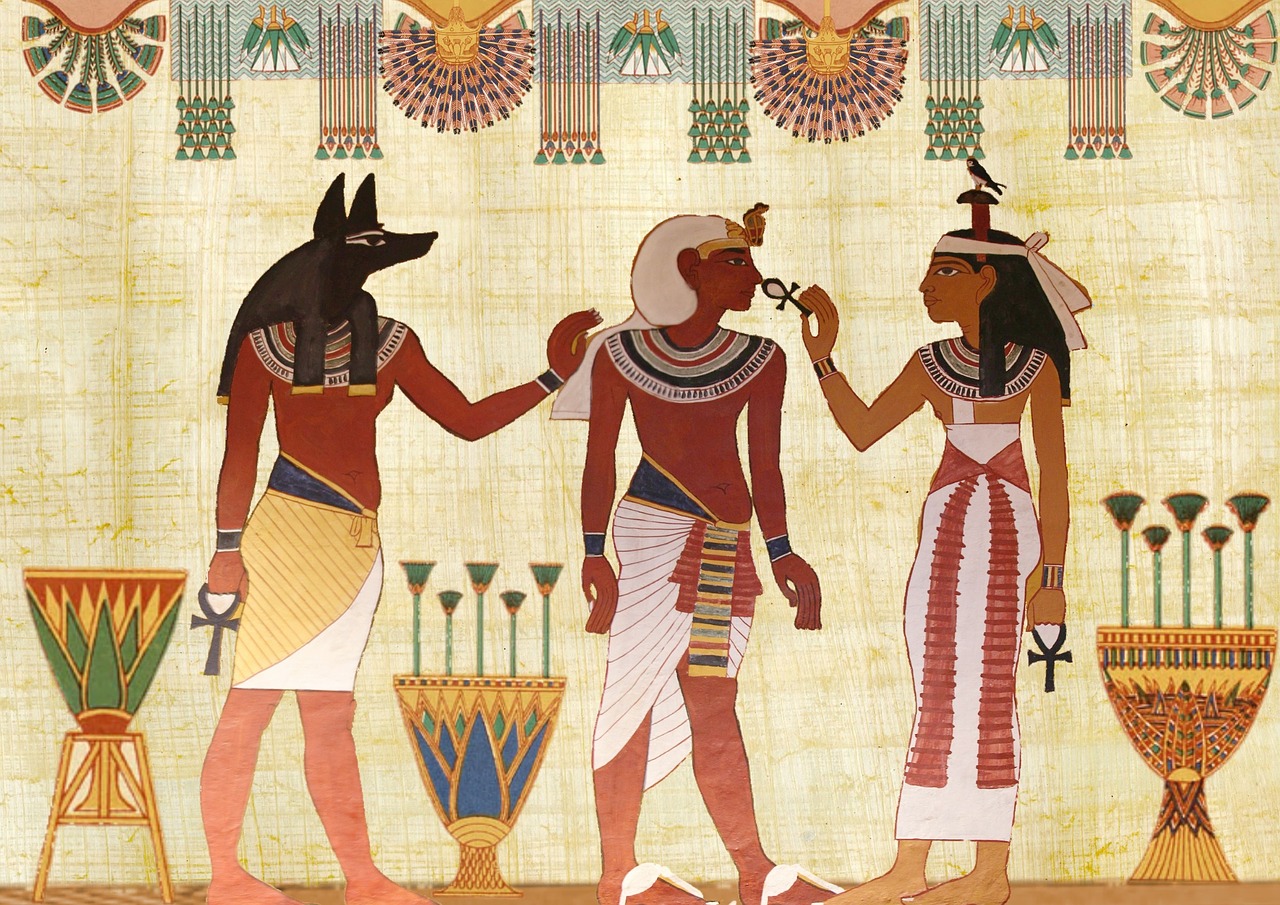
Ancient Egyptians believed that an effective love potion would be concocted by mixing “the dandruff from a murdered man…with barley, apple pips, blood from a tick that bit a specifically black dog, your own blood, and your semen. This mixture is supposed to be planted in the beverage of your beloved…” (link). They also believed, although much earlier in the empire, that Ra, their sun deity, was incapacitated by a snake created from his own saliva and then robbed of his power by Isis, a lesser goddess (link). While Ancient Egyptian religion saw the rise and decline of gods, their king was both mortal and divine at the same time. They effectively served directly under a god.
The World Health Organization (WHO) reports that alive today, are 200 million women that have been subjected to female genital mutilation (FGM) in Africa, Asia and the Middle East (link). This is a process by which all or part of a woman’s (between infancy and 15 years of age) clitoris and labia are removed. The WHO also reports that this procedure has no medical benefit and may lead to a slew of complications including, “severe bleeding and problems urinating, and later cysts, infections, as well as complications in childbirth and increased risk of newborn deaths” (link). In recent reports, the United States has seen a number of these procedures carried out on girls within their borders as well. The Quran does not mention any such requirement, but the Hadith, which is the lens through which one is supposed to interpret Islam, mentions it. There are differing levels of agreement on what is religiously obligatory, but the WHO lists cultural and religious tradition as one of the contributing factors to the practice.
As a point of interest, the Danish Medical Association has listed the circumcision of boys as medically unnecessary, but worries that a legal ban would allow for unauthorized procedures since the issue is “culturally and religiously complex” (link).
On the Tana island in Vanuatu, an island nation of 286,429 people in the Pacific, there is a religious sect of the Kastom people that believe Prince Philip, Duke of Edinburgh, is a divine being. In May of 2017, the Kastom saw an approaching cyclone as coinciding with Prince Philip’s announcement of his retirement. This, they claimed was evidence that the prince had attained a higher level of divinity or sacred status (link).
This is added to a long list of strange beliefs that can be discussed at length, but my point has been made (longer list here).
As Richard Dawkins notes, “we are all atheists about most of the gods that humanity has ever believed in. Some of us just go one god further.” Strikingly, this “belief” we value so much in our respective faiths have the same amount of evidence as any other, none. Again, faith is inherently characterized by the lack of empirical evidence.
Why would your faith be held above any other’s? Why are all your deceased loved-ones in heaven and not hell? You would necessarily have to believe that you are somehow more credible than legions of other people that were born into no more or lesser circumstances that you were to feel justified in your beliefs.
But of course! God is, in any sane context, a pantheistic one, an all-inclusive one. You’re still left with the problem of evidence, which as we’ve seen, is not all that important in any other faith but nevertheless goes so far as to engender real world actions and biases. Sometimes, they’re not even all that obvious.
